Defense companies rarely lose on technology. They lose because nobody translated the capability into a buyer, a program, and a contract fast enough. I work alongside early-stage defense founders as a fractional executive to build the business side of the company: capture, sales, operations, and communications. I find the customer who has your problem, put your product in their language, and build the pipeline and systems your team runs without me. Built by an operator behind $50M+ in closed defense contract revenue.
A new class of companies, Anduril, Palantir, SpaceX, the neoprimes, are winning by fielding in months what used to take years. The whole sector is reorganizing around speed and ownership. The 2030 defense company model is here, and commercialization is the model: the same capability sold to commercial customers and the government, with the faster revenue funding the slower contract. The window to become a company that matters is open now, and it won't stay open. The startups that move fast and own their foundation will define the next decade. The ones that don't will be footnotes.
Here's the week most early-stage technical founders are living: you're the CEO, the head of sales, and the ops manager. The pipeline lives in your head, the buyer list is a spreadsheet, and nobody on the team can name the program office that would actually fund this. The approvals live in your inbox, and the company runs on a patchwork of rented SaaS: tools you pay for but never own. It works on day one. It breaks at scale. When you don't own your systems, every change is a support ticket and every fix runs on someone else's roadmap. The defense industry now moves in hours; you're waiting weeks on a vendor to ship a change you could have made yourself by lunch.
You can't justify a $400K executive hire yet, and you shouldn't have to. But somebody has to build the machine, and right now that somebody is you, at 11pm, instead of fielding the product you built the company around.
I embed with you and your team as a fractional executive. We start with the mission, not the pitch: what it does, who needs it, what's been tested, and where the buying path already exists. Then I translate it into the customer's language, name the program or capability gap that points at you, and find the partner who shortens the path. The government isn't always the first buyer. Almost everything built for defense has a commercial application, and I look for the first door that opens, not the one that opens in two years.
From there I go after whatever is slowing you down most: the sales motion, the ops paperwork, the fact that nobody can see the live state of the business without asking five people. I build the replacement on your stack and put it in your hands. Then I hand it over. Everything I build, you own. Run it, change it, or throw it out. You keep the system and the speed. You don't keep paying me to stand next to it.
A cinematic product launch for a silent flying wing that finds drone operators by passive direction finding. A physics-based aero estimator that reads real CAD and screens designs ~1000× faster than full CFD. Market intelligence, operations analytics, competitive dossiers, all live, all self-contained, all the caliber of work I build into your shop.

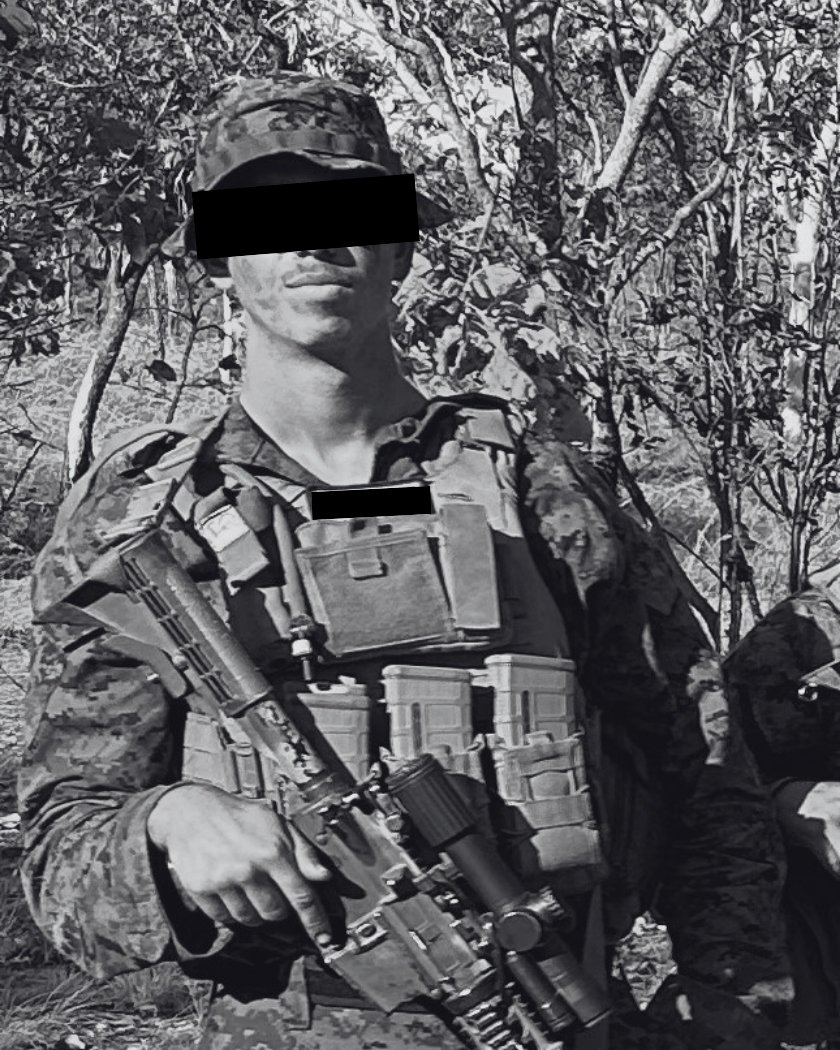
I started in the Marine Corps as a mortarman, forward observer, and drone operator, where slow information gets people killed. You learn quickly to build the fastest possible path between decision and execution. That instinct is what drives my entire business.
Since then I've brokered over $50M in international defense procurement deals while supporting the operational infrastructure that made those deals possible. I've brought millions more into startups and built the teams behind them, teams capable of making major leaps without drowning in operational inefficiency. I've built sales organizations from zero, twice, and watched companies with revolutionary products lose to their competitors because they couldn't ship at the pace their market demanded. I can talk to a Marine about the mission, a founder about product and cash, an investor about risk, a government buyer about requirements, and an engineer about what the system can actually do.
I'm not the old guard from Washington with a fixed playbook. I move the way you do: fast, with the newest tools, and with the assumption that everything I build should outlive my involvement.
Trenton Crouch, Founder · The Gideon Corp. · LinkedIn
That's now. Give me 15 minutes and I'll tell you who should be buying from you, government or commercial, what's standing between you and them, and where you're slow. What you do with that is yours.